All Men Are Created Equal but Only the
As someone who’s stitched thousands of designs across apparel, home goods, and personalized gifts—everything from delicate baby onesies to rugged tote bags—I opened All Men Are Created Equal but Only the with cautious curiosity. Not because the phrase is unfamiliar, but because its tone, rhythm, and implied audience demand careful translation into thread and fabric. This isn’t just another T-Shirt Designs graphic—it’s a statement piece with layered social resonance, and that weight matters when you’re choosing what goes on a handmade product meant to be worn, gifted, or sold.
First Impression: Bold, Balanced, and Slightly Unexpected
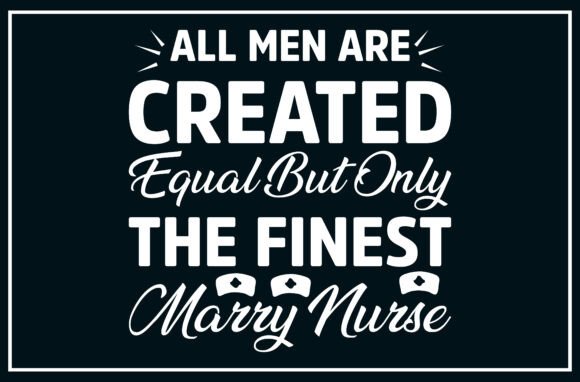
The design lands with quiet confidence—not loud, not ironic, but grounded in clean typography and intentional spacing. The phrase “All Men Are Created Equal but Only the” cuts off deliberately, inviting interpretation while leaving room for visual breathing. As a machine embroidery design, it reads well at medium scale (3.5–4.5 inches wide), with letterforms that avoid excessive serifs or thin strokes—smart for satin stitch legibility. There’s no decorative flourish, no clipart flair; instead, it leans into typographic sincerity. That makes it versatile—but also demanding. It won’t hide behind busy backgrounds or trendy fonts. It asks to be seen clearly, and that means your execution has to match its clarity.
A Real-World Test: Embroidering a Linen Kitchen Towel for a Nurse’s Gift Set
Last week, I used All Men Are Created Equal but Only the on a natural linen tea towel—part of a small-batch gift set for a new nurse friend. We paired it with a subtle cross-stitch heart motif and soft grey thread. The result? Striking, respectful, and conversation-starting—without tipping into cliché. Because the design avoids overt medical symbols (no stethoscopes, no red crosses), it felt more personal, more human. Customers who saw the finished product didn’t just say “cute”—they paused, read it aloud, smiled quietly. That’s the mark of a strong embroidery file: it connects before it decorates.
Where It Shines—and Where It Needs Extra Care
All Men Are Created Equal but Only the works beautifully on structured, medium-weight fabrics: cotton twill aprons, midweight sweatshirts, canvas tote bags, and pillow covers with tight weaves. Its even letter height and consistent stroke width translate reliably into fill stitch and satin stitch without distortion. On dark fabric, it gains gravitas—especially with charcoal or navy thread. On light fabric, crisp white or oat thread keeps it warm and approachable.
But here’s where attention matters:
- Small hoop sizes: Below 3 inches wide, some letters begin to lose definition—especially the lowercase “e” and “l” in “equal.” Not unworkable, but test first.
- Stretchy or thin fabric: Like lightweight jersey tees or baby knit onesies—this design needs firm stabilizer backing. Without it, the text can ripple or pucker under tension.
- Curved surfaces: Caps or curved mugs (if printed) require reflowing or simplification—this version isn’t optimized for wrap-around digitizing.
- Frequent washing: Because of its clean lines and moderate stitch density, it holds up well—but always use high-quality polyester thread and secure jump stitches.
What It Adds to Your Finished Product
This isn’t just decoration—it’s context. When you embroider All Men Are Created Equal but Only the onto a custom sweatshirt for a nursing school graduation, you’re offering recognition, not just apparel. On a boutique-branded tote bag, it signals values-aligned curation. For an Etsy seller listing hand-embroidered nursery pillows, it adds narrative depth—especially if paired thoughtfully with complementary motifs (like a tiny caduceus or olive branch).
That said, it doesn’t suit every brand voice. If your craft business leans playful or whimsical, this design may feel too solemn unless intentionally contrasted. It thrives in spaces where authenticity, quiet confidence, and intentionality are part of the product story—think small shop merchandise, holiday gifts for healthcare workers, or wedding weekend apparel for medical professionals.
Practical Designer Notes Before You Stitch
Before committing to a client project or production run, do these five things:
- Test on scrap fabric—same type and weight as your final piece—to confirm how thread color interacts with texture and drape.
- Review stitch density in your embroidery software. If it’s dense in tight areas, consider reducing underlay or adjusting pull compensation.
- Confirm hoop size compatibility. This design scales well, but verify your machine’s maximum embroidery area matches your intended layout.
- Inspect corners and terminals. Look for any sharp vector points that could cause thread breaks or skipped stitches on older machines.
- Check licensing. Since the product description mentions SVG and JPEG files—and notes it’s usable on mugs, pillows, and apparel—confirm whether commercial use is permitted for both digital resale and physical finished products.
Final Thought: A Design That Earns Its Space
All Men Are Created Equal but Only the isn’t flashy. It doesn’t shout. But in a market flooded with reactive, trend-chasing Graphics, it stands out by being thoughtful first—and decorative second. That’s rare. As a designer, I reach for it when the project calls for meaning over momentum: a commemorative embroidered patch for a hospital volunteer group, a minimalist kitchen towel for a nurse-owned café, or a refined baby blanket for a pediatrician’s newborn. It works because it respects the wearer, the maker, and the message—equally.
If you’re an Etsy seller, craft fair vendor, or small shop owner building a collection of meaningful embroidery project assets, treat this one like a quiet signature piece—not background filler. Use it with care, pair it with integrity, and let the words speak for themselves.