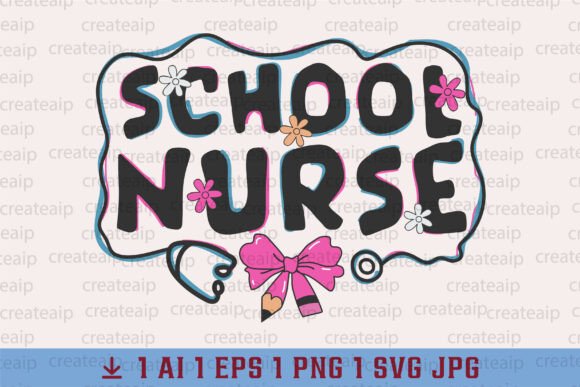
Cute School Nurse Design
A Designer’s First Glance: Friendly, Not Fussy
When I opened the Cute School Nurse Design, my first thought wasn’t “cute”—it was “clear.” The composition is balanced and centered, with gentle curves, soft facial features, and a modest, approachable expression. There’s no exaggerated wink or cartoonish grin—just quiet kindness in the eyes, a small red cross badge, and a simple nurse’s cap tilted just so. It reads as warm, professional, and age-neutral—equally at home on a toddler’s onesie or a teacher’s tote bag. As a machine embroidery design, it avoids over-detail: no tiny eyelashes, no intricate lace trim, no micro-lettering. That’s not a limitation—it’s smart restraint.
Where This Design Earns Its Keep
I tested Cute School Nurse Design on a midweight cotton twill tote bag for a local preschool fundraiser. Stitched at ~4.5" wide with standard 40-weight polyester thread, it held up beautifully: clean satin-stitched outlines, even fill stitch coverage, and no puckering—even across the curved seam near the handle attachment point. It also translated well to a lightweight baby sweatshirt (using tear-away + cutaway stabilizer combo), where the reduced density kept the fabric soft and wearable. For Etsy sellers and craft business owners, this is gold: it’s versatile enough for personalized gifts (think “Nurse Emma” embroidered beside the design), boutique nursery decor, or small shop merchandise like embroidered tea towels for school nurses’ appreciation week.
The design’s simplicity makes it ideal for custom apparel—especially on darker fabrics. I ran it in white thread on navy cotton-poly blend t-shirts and saw strong contrast without needing underlay-heavy fills. It also works cleanly as an embroidered patch: the outer edge is smooth and continuous, making it easy to trim and fuse. As a Graphics-category file, it’s likely vector-based or high-res raster—so it scales cleanly for printable mockups used in digital product previews or social media listings. That matters if you’re an Etsy seller building trust through polished visuals before stitching a single piece.
Where to Pause—and Test
Don’t assume Cute School Nurse Design will behave the same on every surface. On thin jersey or stretchy fabric? It’ll need extra stabilization—especially around the cap brim and cross shape, where tension shifts can distort fine satin stitch lines. On textured fabrics like terry cloth or heavy fleece? Reduce stitch density slightly and consider using a water-soluble topper to keep thread from sinking into the pile. And if you’re stitching it on a curved surface—like the front of a structured cap—the design’s symmetry helps, but always do a test run on scrap with your exact hoop size and fabric combination.
Small hoop sizes (<5") may require repositioning or slight scaling down—check how the cap detail and cross hold up when compressed. Tiny lettering isn’t present here (a plus), but if you plan to add custom names or dates nearby, leave breathing room: dense fill areas in the original design don’t leave much margin for adjacent text without crowding. Also, while the design avoids overly tight corners, inspect the inner curve of the cap band—if your machine struggles with sharp directional changes, a quick digitizing tweak might help prevent skipped stitches.
What It Adds to Your Finished Product
This isn’t just decoration—it’s tone-setting. A well-executed Cute School Nurse Design elevates handmade product perception: it signals care, clarity, and intentionality. Customers notice when embroidery feels considered—not just slapped on. That builds trust, especially for personalized gifts or boutique branding. I’ve seen buyers comment specifically on “how sweet but not babyish” this style feels—ideal for adult healthcare workers, nursing students, or educators who want lighthearted professionalism. It also supports brand consistency: pair it with clean fonts and muted thread palettes (navy, sage, cream, soft red), and it becomes part of a cohesive visual language across tote bags, aprons, and pillow covers.
For holiday embroidery or wedding gifts (yes—nursing friends get married too!), it adds warmth without cliché. And because it’s not tied to a specific season or trend, it stays relevant year after year—unlike overly themed graphics that date quickly. That longevity matters for small shop owners curating evergreen inventory.
Practical Notes Every Embroidery Designer Should Run Through
- Always test on scrap fabric first—especially with your chosen stabilizer and thread colors.
- Review stitch density: if it feels heavy on light fabric, adjust fill angles or reduce density by 5–10%.
- Confirm hoop size compatibility before hooping expensive garments—some versions may push close to 5x7 limits.
- Inspect small details like the cross outline and cap stitching in both black-and-white and color mockups.
- Compare performance on light vs. dark backgrounds—thread contrast changes perception more than you’d expect.
- Use proper stabilizer: medium cutaway for knits, tear-away for stable wovens, water-soluble topper for napped fabrics.
- Verify licensing terms: since this is sold as a digital embroidery file, confirm whether commercial use (e.g., selling finished embroidered totes) is permitted—don’t assume.
- Check file formats included: ensure they match your machine (DST, PES, EXP, etc.)—the listing only mentions a zipped folder, so unpack and verify before stitching.
Final Thought: A Quiet Workhorse, Not a Flashy Gimmick
Cute School Nurse Design won’t shout—but it doesn’t need to. It’s the kind of embroidery file that earns repeat use because it solves real problems: legibility on varied fabrics, scalability across product types, and emotional resonance without overselling. It fits naturally in a T-Shirt Designs collection, yes—but its strength lies beyond tees: in the thoughtful stitch of a baby blanket, the durable charm of a nurse’s apron, or the polished finish of a boutique’s holiday gift set. If you’re choosing designs for client work, craft fairs, or your own Etsy shop, this one earns its place—not for being flashy, but for being reliably, quietly right.