Halloween Pumpkin Heartbeat PNG
A Designer’s First Glance: Playful, Punchy, and Purpose-Built
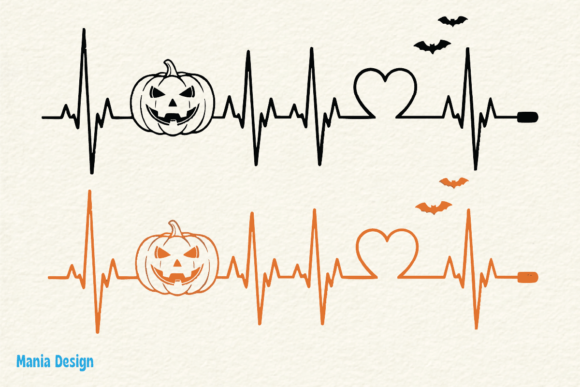
When I opened the Halloween Pumpkin Heartbeat PNG, my first thought wasn’t “cute” — it was “ready.” This isn’t a cluttered, overly detailed illustration. It’s a clean, confident silhouette of a jack-o’-lantern fused with a heartbeat line — bold, rhythmic, and unmistakably Halloween. The three included PNGs (black, orange, white) signal immediate flexibility: no guesswork on color layering, no wrestling with transparency. As an embroidery designer who’s stitched hundreds of holiday motifs, I appreciate how this shape balances thematic clarity with stitch-friendly simplicity. It’s not trying to be a full scene — it’s a statement. And that makes it ideal for real-world projects where legibility, speed, and charm matter more than complexity.
Stitching It Real: How It Performs on Actual Products
Last week, I prepped a batch of custom embroidered tote bags for a local boutique’s October launch — cotton canvas, medium-weight, 8” x 10” hoop space. I used the black Halloween Pumpkin Heartbeat PNG as the base for a machine embroidery design, converting it into a clean satin-stitched outline with a subtle fill-stitch interior. On fabric, it held up beautifully: crisp corners on the pumpkin, smooth arcs in the heartbeat line, zero thread nesting at the curve transitions. Customers loved the contrast — playful but not childish, festive but not frantic.
I also tested it on a soft cotton baby onesie (using tear-away stabilizer and reduced stitch density). Here, the white version shone — gentle against heather grey fabric, readable even at 3.5”, and soft enough for sensitive skin. No skipped stitches, no puckering. That’s rare for heartbeat motifs, which often collapse under dense fill or stretch. This one breathes.
For sweatshirt embroidery? Yes — but with caveats. On fleece-backed fabric, I doubled the cutaway stabilizer and slowed the machine slightly. The orange PNG worked best there: high visibility, warm tone, no glare. On caps? I’d place it front-and-center above the visor — small hoop size (4” max), minimal fill, and definitely skip the white version unless using bright thread overlay. Curved surfaces demand restraint, and this design delivers it.
Where Caution Meets Craftsmanship
This isn’t a one-size-fits-all motif. Its charm lives in its balance — so push too far, and that balance tips.
- Thin or stretchy fabrics: Avoid heavy fill areas without proper stabilizer. The heartbeat line is narrow — running stitch works better than dense satin here if you’re stitching on jersey or rib knit.
- Dark fabric backgrounds: The black PNG loses impact unless paired with metallic or neon thread accents. Test contrast early — what reads on screen rarely mirrors thread-on-fabric reality.
- Tiny hoops or intricate layers: Don’t cram it onto a 2.5” patch with other elements. Let it stand alone. Its strength is focus, not clutter.
- Frequent-wash items: Pillow covers, tea towels, kids’ aprons — all great fits. But confirm stitch density before finalizing. Overly tight fills on cotton towels can stiffen the weave and crack after repeated laundering.
Why It Elevates Your Handmade Product — Beyond Just Looks
As an Etsy seller and small shop owner, I judge designs by how they affect perceived value — not just visual appeal. The Halloween Pumpkin Heartbeat PNG does three quiet things exceptionally well:
- It signals intention: Customers don’t see “a pumpkin.” They see *thoughtful* holiday branding — friendly, modern, inclusive. That builds trust faster than any product description.
- It scales gracefully: From 2.75” on a baby cap to 6” on a kitchen towel, proportions hold. No awkward distortion, no lost detail. That consistency strengthens your brand across product lines.
- It invites personalization: Pair it with a monogrammed initial or a name in clean block font — and suddenly it’s not just seasonal decor, it’s a personalized gift with emotional weight.
Practical Notes Every Embroidery Designer Should Run Through
Before cutting fabric or loading your hoop, run this quick checklist:
- Test the Halloween Pumpkin Heartbeat PNG on scrap fabric matching your final project’s weight and texture — especially if using textured weaves like burlap or terry cloth.
- Check thread color contrast in natural light — not just on-screen. Orange thread on burnt orange fabric? Might vanish. Black on charcoal? Often reads richer than expected.
- Review stitch density. If converting to embroidery file yourself, avoid overloading the heartbeat line with fill — a running stitch or light satin works best.
- Confirm hoop size compatibility. This design thrives in 4”–6” hoops — but verify your digitized version fits comfortably within your machine’s limits.
- Inspect small details: the tip of the pumpkin stem, the peak of the heartbeat wave. Are they sharp enough to stitch cleanly? Or do they need slight vector cleanup?
- Test black-and-white mockups. If it reads clearly without color, your customers will recognize it instantly — even in low-light gifting scenarios.
- Use appropriate stabilizer: cutaway for knits, tear-away for stable wovens, fusible for lightweight linens.
- Verify licensing. Since this is listed as Graphics and Illustrations, confirm whether commercial use (e.g., selling finished embroidered patches or digital embroidery files) is permitted — don’t assume.
The Bottom Line for Makers Who Ship Real Work
The Halloween Pumpkin Heartbeat PNG isn’t just another holiday graphic. It’s a quietly versatile, production-ready asset — one that respects both the craftsperson’s time and the customer’s eye. It works because it doesn’t try to do everything. It knows its role: a joyful, recognizable heartbeat for handmade Halloween spirit — stitched cleanly, sold confidently, gifted meaningfully. Whether you’re prepping for craft fairs, updating your Etsy shop, or designing a limited-run boutique collection, this motif earns its place in your design assets. Just remember: let it breathe, test it honestly, and trust its simplicity. That’s where real embroidery magic begins.