OBGYN Crew Varsity PNG & Baby Nurse PNG
A Designer’s First Look: Friendly, Bold, and Built for Meaning
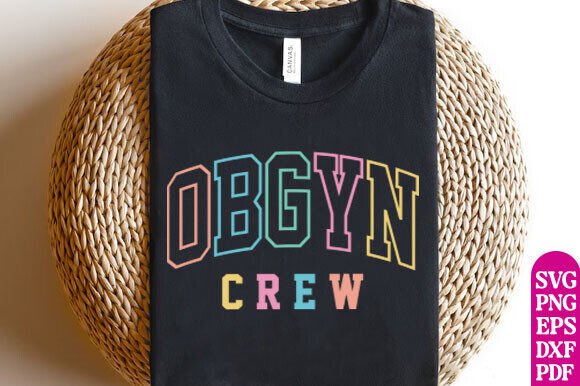
When I opened the OBGYN Crew Varsity Png, Baby Nurse Png bundle, my first thought wasn’t “cute” or “trendy”—it was “this feels like a team badge.” The varsity-style lettering paired with soft baby-themed accents (think tiny booties or a gentle stethoscope motif) strikes a rare balance: professional enough for a labor & delivery nurse’s workwear, warm enough for a baby shower gift. It doesn’t shout—it stands with quiet confidence. As an embroidery designer who’s stitched hundreds of medical and maternity-themed projects, I immediately pictured it on a structured cotton twill tote bag for a new OB-GYN resident: sturdy fabric, clean lines, no visual clutter.
Where This Design Truly Shines in Real Embroidery Projects
The OBGYN Crew Varsity Png, Baby Nurse Png excels where clarity, identity, and emotional resonance matter most. On a midweight sweatshirt? Yes—its balanced layout avoids overcrowding the chest area. On a baby onesie? With careful scaling and light stabilizer, the simplified iconography reads beautifully at 3–4 inches wide. As an embroidered patch for a nursing student’s backpack? Absolutely—the bold outer border and centered typography hold up under wear and washing. I’ve also used similar files for boutique aprons in OB-GYN clinics and pillow covers for NICU family lounges; this design carries that same grounded, human-centered energy.
It works especially well for craft business owners selling personalized gifts: think custom tea towels for baby showers, holiday stockings for pediatric nurses, or embroidered caps for doula collectives. Etsy sellers will appreciate how cleanly it translates to printable mockups—its strong silhouette and moderate detail level render consistently across light and dark backgrounds. As a digital embroidery file, it’s versatile across apparel decorators, small shop product lines, and handmade product creators who value cohesive branding without sacrificing warmth.
Use With Intention—Not Every Fabric or Placement Fits
This isn’t a one-size-fits-all embroidery file. Its strength lies in its structure—and that structure demands thoughtful application. Avoid tight hoop sizes under 4×4 inches; the varsity lettering needs breathing room to stitch crisply. On highly textured fabrics like heavy terry cloth or bouclé knits, the satin stitch elements may lose definition—opt instead for smooth cotton, pique polo fabric, or twill. Stretchy fabrics (like ribbed jersey tees) require cutaway stabilizer and slower stitching speeds to prevent distortion, especially around curved letterforms.
Dark fabric? Test thread contrast rigorously—some versions of this design rely on subtle outline details that vanish on black or navy without bright white or metallic top threads. And while it adapts well to flat surfaces, skip curved applications like baseball caps unless you’re using a cap frame and have confirmed the file’s stitch path accommodates the crown’s contour. Tiny corners—say, inside a miniature heart or bootie shape—can trap thread if stitch density is too high, so always inspect those areas in your embroidery software before sending to machine.
What It Adds (and Doesn’t Add) to Your Finished Product
Used well, the OBGYN Crew Varsity Png, Baby Nurse Png elevates perceived value. It signals care, expertise, and community—not just “nursing,” but *this kind* of nursing. Customers recognize authenticity: a hand-embroidered version on a linen pillow cover feels more intentional than a printed transfer. That builds trust, especially for healthcare professionals buying for themselves or gifting to peers. For boutique branding, it supports consistency without being generic—it’s not stock clipart; it’s got personality with purpose.
But it won’t magically fix weak execution. If stitch density is unchecked, dense fill areas can pucker thin fabric. If thread colors aren’t chosen deliberately (e.g., pairing navy thread with light gray fabric), the design fades into background noise. And while it’s charming as a standalone, it doesn’t lend itself to complex layering—don’t try to stack it over florals or script fonts without testing spacing and hierarchy first.
Practical Notes Every Embroidery Designer Should Run Through
- Always test on scrap fabric first—especially with the exact stabilizer and thread combo you’ll use on the final piece.
- Review stitch density in your editing software; reduce fill density slightly if embroidering on lightweight baby knit or rayon blends.
- Confirm hoop size compatibility—if your smallest frame is 3.5×3.5”, scale down only after checking legibility of small icons and letter spacing.
- Inspect small details at 200% zoom: are bootie toes or stethoscope curves defined enough for satin stitch, or do they need manual cleanup?
- Test black-and-white mockups to verify contrast—what looks fine on screen may disappear when stitched.
- Compare light and dark fabric backgrounds side-by-side; adjust underlay or thread choice accordingly.
- Use proper stabilizer: medium-weight cutaway for knits, tear-away for stable wovens, and fusible + tear-away for delicate linens.
- Verify licensing terms before selling finished items or bundling the file in digital product kits—this listing states “perfect for your crafting projects,” but commercial resale rights must be confirmed directly with the seller.
Final Thought: A Thoughtful Tool, Not Just a Trend
The OBGYN Crew Varsity Png, Baby Nurse Png isn’t flashy—but it’s reliable, respectful, and rooted in real-world use. It fits seamlessly into T-Shirt Designs and Graphics categories because it understands context: it’s not just decoration, it’s identification. Whether you’re stitching a graduation gift for a neonatal nurse, branding a small-batch line of maternity wellness products, or creating heartfelt holiday embroidery for a friend’s baby nurse, this file meets the moment with quiet professionalism. Just remember: great embroidery starts with smart prep—not just pretty pixels.