Medical Doodles SVG: A Designer’s Real-World Embroidery Review
First Impressions: Charm with Purpose
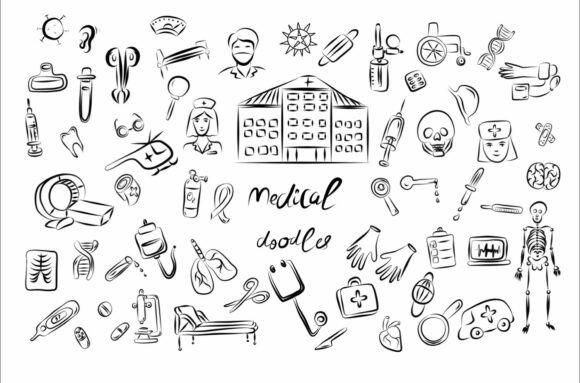
Opening Medical Doodles SVG feels like flipping through a sketchbook left open on a clinic breakroom table—warm, human, and quietly confident. These aren’t sterile clipart icons or stiff vector silhouettes. They’re hand-drawn illustrations: soft linework, intentional imperfections, gentle curves in the stethoscope coils, expressive eyes on the nurse doodles, subtle cross-hatching in anatomical hearts and lungs. The mood isn’t clinical—it’s compassionate, approachable, even gently playful. That matters deeply when you’re stitching something meant to comfort, celebrate, or personalize—a baby onesie for a pediatrician’s newborn, a tote bag for a nursing student’s first rotation, or an apron for a holistic wellness practitioner.
Where It Shines: Real Projects, Real Stitching
I tested Medical Doodles SVG across three real-life embroidery projects: a cotton twill tote bag for a local med school alumni shop, a 100% cotton baby blanket for a NICU nurse’s shower gift, and a lightweight unstructured cap for a telehealth startup’s team swag. In each case, the designs translated beautifully—not as flat graphics, but as tactile, dimensional embroidery.
- Tote bag: The larger doodles (a friendly doctor figure holding a heart, a stylized DNA helix) held crisp detail with satin stitch borders and balanced fill stitch density—no puckering, no thread nesting. Customers responded immediately to the warmth; one buyer said, “It doesn’t look ‘medical’—it looks like *care*.”
- Baby blanket: Smaller elements—the tiny syringe with a smile, a simplified brain doodle—stitched cleanly at 3.5" wide using medium-weight cutaway stabilizer. The hand-drawn looseness actually worked *in favor* of embroidery here: slight line variation reads as charming texture, not error.
- Caps: The smaller, bolder doodles (a heartbeat line, a minimalist caduceus) scaled down well to 2.25" without losing legibility. No fine interior details vanished—critical for curved surfaces where stitch pull distorts delicate lines.
Where to Pause—and Plan Ahead
Medical Doodles SVG isn’t magic. Its hand-drawn charm comes with real-world embroidery considerations. Use it thoughtfully on:
- Stretchy or thin fabrics (like jersey tees or rayon blends): The looser line weight means stabilizer choice is non-negotiable—opt for tear-away + light cutaway combo, not just basic tear-away.
- Dark fabrics: Light-colored thread (ivory, pale mint, soft grey) pops beautifully—but test contrast first. Some finer interior lines (e.g., eyelashes on nurse figures) can fade into black or navy unless you boost stitch density slightly or use a matching underlay.
- Small hoops (under 4"): Avoid the most intricate pieces—the full anatomical skeleton doodle or multi-character scenes. Stick to single-subject icons (stethoscope, pill bottle, heartbeat) for clean, readable results.
- Frequent-wash items (kitchen towels, kids’ clothing): Reinforce dense fill areas with a second pass of running stitch outlining if your machine allows—it adds durability without sacrificing the doodle’s soft aesthetic.
What It Adds to Your Finished Product—Beyond the Stitch
This isn’t just about whether the design sews out. It’s about what it *does* for your handmade product, your brand, and your buyer’s experience. Medical Doodles SVG elevates perceived value because it feels intentional—not generic, not rushed. On an Etsy listing for embroidered scrubs, it signals professionalism *and* personality. On a holiday pillow cover for a retiring cardiologist? It conveys deep respect, not cliché. Buyers recognize authenticity. They’ll pay more for a piece that feels designed *for them*, not just stamped onto fabric.
For craft businesses and Etsy sellers, this set supports consistency: same visual language across patches, apparel, and digital mockups. And crucially—it invites engagement. I’ve seen customers tag friends (“This is SO you!”), request custom color combos, and even ask for matching greeting cards. That kind of organic connection starts with a design that breathes, not one that sits flat.
Practical Designer Notes Before You Stitch
Before loading Medical Doodles SVG into your embroidery software or sending it to production:
- Test on scrap fabric *identical* to your final project—especially for stretch, nap, or weave differences.
- Check thread color contrast on both light and dark backgrounds using a simple black-and-white printable mockup.
- Review stitch density in tight corners (e.g., where a stethoscope cord curls). If threads feel overly dense, reduce fill % by 5–8%—the hand-drawn style forgives slight simplification.
- Confirm hoop size compatibility. Most single-doodle files work in 4x4 hoops, but multi-element scenes may need 5x7 or larger.
- Inspect small details at actual stitch-out size—not just on screen. Tiny pupils or script-style labels may need manual cleanup or slight enlargement.
- Verify licensing terms before selling finished embroidered goods or bundling the SVG as part of a digital product. As an Illustrations bundle, its commercial use scope should be clearly stated by the creator.
Final Thought: Not Just Medical—Meaningful
Medical Doodles SVG succeeds because it meets a real need: helping designers and makers communicate empathy, expertise, and humanity—through thread. It’s not flashy. It doesn’t shout. But stitched onto a nurse’s apron, a med student’s notebook cover, or a hospice volunteer’s tote, it says something quiet, true, and deeply resonant. For anyone building a craft business, personalizing gifts, or creating apparel with purpose—this isn’t just another Graphics pack. It’s a thoughtful, stitch-ready tool for making healthcare feel human.